



How Much Does a Bidet Actually Save You?
Cancel the subscription you never signed up for.
Toilet paper costs never stop. Here is the honest math on what a bidet saves, and when it pays for itself.

A bidet typically pays for itself within one to two years. Most households spend $120 to $300 a year on toilet paper, and a bidet cuts that use dramatically while adding only a few dollars a year in water and electricity. After the payback point, the savings are yours to keep.
The cost nobody budgets for
The average American goes through roughly one to two rolls of toilet paper per week. For a household of two to four people, that commonly adds up to $120 to $300 or more per year, and larger families run well past that. The sneaky part is that this cost never stops. Toilet paper is a subscription you never signed up for and cannot cancel. Until now.
What a bidet costs up front
Less than you might expect, and there is a range for every budget:
| Option | Typical price range | Best for |
|---|---|---|
| Bidet attachment | Roughly $40 to $100 | Trying a bidet without a big commitment |
| Non-electric bidet seat | Roughly $80 to $150 | A cleaner look with no outlet needed |
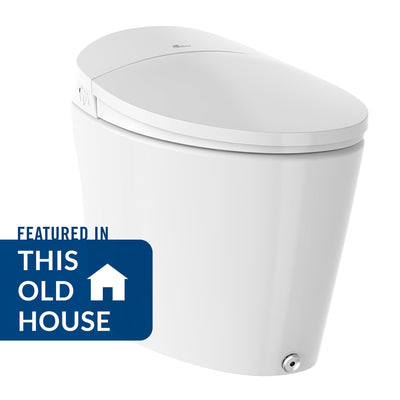
| Electric bidet seat | Roughly $200 to $700 | Warm water, heated seat, air dryer, the works |
If the up-front cost is the sticking point, financing through Affirm is available, and orders over $199 ship free.
Pennies to run
A bidet wash uses about an eighth of a gallon of water, roughly a pint, which adds pennies per month to a water bill. An electric seat adds a few dollars a month of electricity at most, less in eco mode. Meanwhile, every roll you stop buying takes its entire manufacturing, bleaching, packaging, and shipping footprint with it. The math tilts fast.
The payback timeline
Take a household of three that spends about $200 a year on paper and cuts that use by 75 percent after switching:
- Annual toilet paper savings: about $150
- Added water and electricity: about $20 to $30 for an electric seat, nearly zero for non-electric
- Net yearly savings: roughly $120 to $150, every year, for the life of the bidet
A $60 attachment pays for itself in about six months. A $300 electric seat, in roughly two years. Water Does It Better®, and it keeps paying you back.
Questions people ask
Does a bidet eliminate toilet paper completely?
Not usually. Most bidet users still keep a little paper on hand for patting dry, unless their seat has an air dryer. Cutting use by 75 percent or more is a realistic expectation.
Do electric bidet seats use a lot of electricity?
No. Typical usage adds a few dollars a month at most, and eco modes reduce that further.
Is a cheap attachment worth it, or should I wait for an electric seat?
An attachment is a great low-risk starting point. Many people start there, get converted, and upgrade to an electric seat later.
How long does a bidet seat last?
A quality bidet seat is built to last for years of daily use, which is what makes the payback math work so well.
See the numbers side by side.
Every model, feature, and price point in one place, so you can find the payback that fits your budget.
Open the comparison chart →